Opening a Pilates studio can be an exciting business opportunity as more people look for effective ways to improve flexibility, core strength, posture, and overall fitness. However, starting a successful studio requires more than finding a location and hiring instructors. You also need a clear business plan, suitable Pilates studio equipment, a functional studio layout, and a strategy for attracting clients.
Whether you are planning a boutique Pilates studio, a private training space, or a larger commercial fitness facility, this guide explains how to open a Pilates studio step by step, including how to choose equipment and build a complete studio setup.
Before purchasing equipment or signing a lease, define your business model. Your studio concept will influence your target customers, equipment requirements, floor plan, and startup budget.
Common Pilates studio business models include:
Boutique Pilates Studio: Focuses on small-group classes, personalized training, and a comfortable customer experience.
Private Pilates Studio: Provides one-on-one instruction and customized exercise programs.
Commercial Pilates Studio: Offers group classes and private sessions with a wider range of Pilates machines.
Pilates and Fitness Center: Combines Pilates training with other fitness services to reach a broader customer base.
Consider your target audience, local competition, membership pricing, class capacity, and expected operating costs. A clear business plan will help you determine how much space you need and which Pilates equipment is essential for your opening.
Understanding the cost to open a Pilates studio is essential for managing your initial investment. Your total startup budget will depend on your location, studio size, equipment quality, and business model.
Typical startup expenses include:
| Expense Category | What to Consider |
|---|---|
| Studio rental | Location, floor area, lease terms, and deposit |
| Renovation and interior design | Flooring, mirrors, lighting, storage, and ventilation |
| Pilates studio equipment | Reformers, Pilates chairs, barrels, towers, and accessories |
| Instructor costs | Recruitment, training, salaries, and certifications |
| Licenses and insurance | Local business requirements and liability coverage |
| Marketing and branding | Website, social media, local advertising, and launch promotions |
| Operating expenses | Utilities, software, cleaning, and ongoing maintenance |
Pilates studio equipment is one of the major initial investments, particularly for studios offering reformer-based classes or comprehensive private training.
To control costs, prioritize the machines required for your core services first. Purchasing multiple types of equipment from a professional Pilates equipment supplier may also simplify procurement, delivery coordination, and studio planning.
The location of your Pilates studio can influence visibility, customer convenience, and long-term profitability. Look for a space that is accessible to your target audience, offers suitable parking or public transportation, and complies with local commercial-use requirements.
The interior layout should allow instructors and clients to move safely between machines. When planning the space, consider:
The number of pilates reformers and other machines.
Clearance around each machine for safe exercise and instructor access.
Dedicated areas for private sessions, group classes, and equipment storage.
Reception, changing facilities, and other customer amenities.
Ventilation, lighting, flooring, and accessibility requirements.
A well-designed Pilates studio layout makes the space easier to operate and helps create a professional training environment. Before finalizing your equipment order, map out the machine dimensions and required movement areas.
Choosing the right Pilates studio equipment is one of the most important decisions when opening a studio. Different machines support different exercises, training levels, and service models. A carefully planned equipment package can help you serve more clients without filling the studio with unnecessary machines.
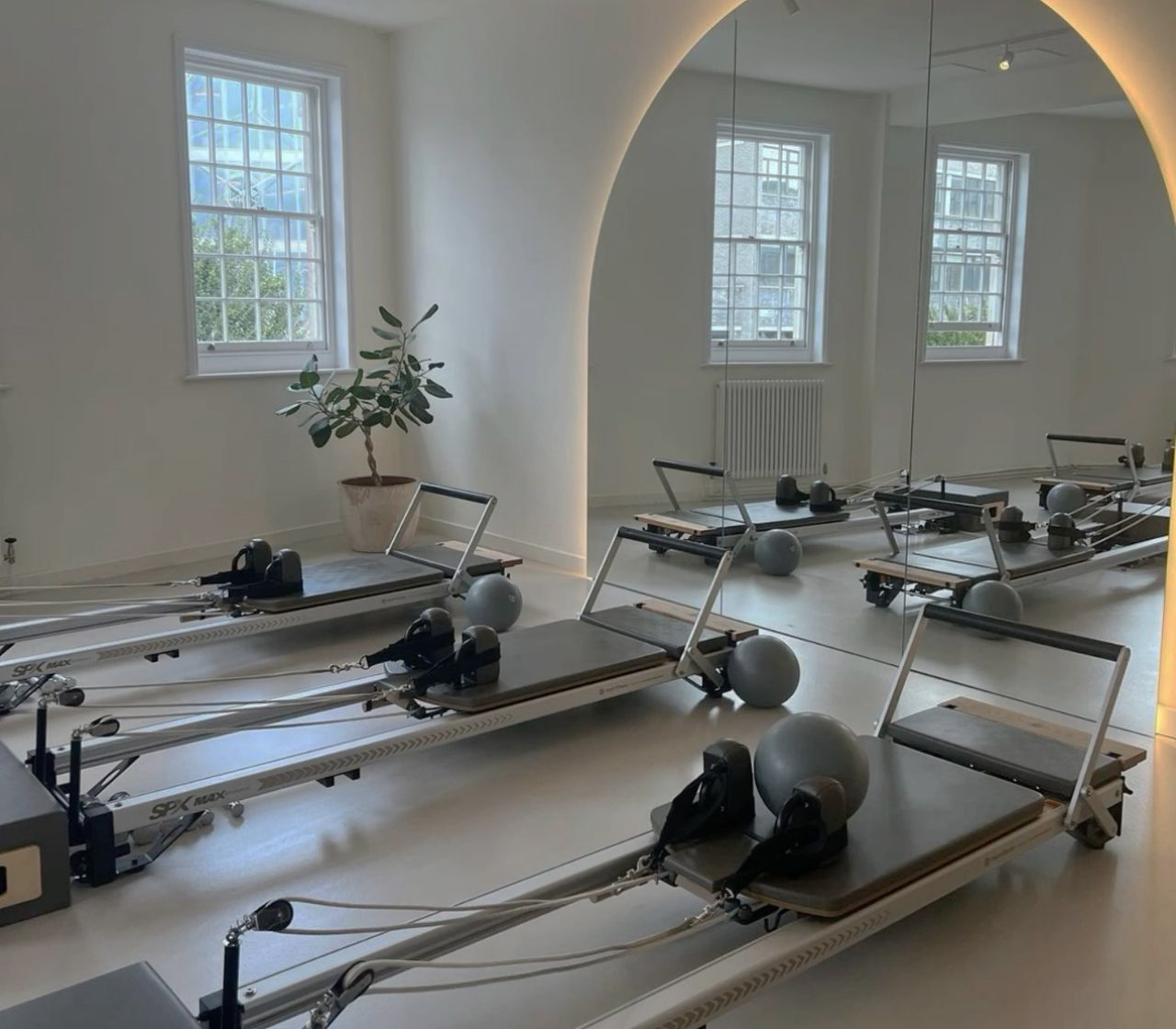
The Pilates Reformer Machine is a central piece of equipment in many modern Pilates studios. It uses a sliding carriage, springs, straps, and adjustable components to support a wide range of exercises.
Commercial Pilates reformers can be used for strength training, flexibility exercises, posture work, and low-impact conditioning. They are suitable for private instruction and many small-group training formats.
When selecting a Pilates reformer, evaluate frame construction, spring resistance, carriage movement, adjustment options, comfort, and maintenance requirements.
The Pilates Cadillac, also known as the Cadillac Trapeze Table, supports a variety of exercises using a raised platform, bars, springs, and straps. It is often used for private sessions, advanced movement training, and specialized exercise programs.
Adding a Cadillac to your studio can expand the range of exercises available to instructors and clients.
The Pilates Chair is a compact machine that uses a pedal and spring resistance to support strength, balance, and stability exercises. Its relatively small footprint makes it useful for studios that want to diversify their training options without dedicating a large amount of floor space.
Pilates barrels and spine correctors support exercises focused on spinal mobility, posture, flexibility, and core control. Their compact design makes them practical additions to both private studios and larger Pilates facilities.
Smaller accessories can expand class variety and support different exercise modifications. Depending on your studio's training programs, useful options may include Pilates rings, resistance bands, stability balls, mats, and other training props.
Selecting complementary accessories alongside your main machines helps create a more complete training environment.
If you want to open a professional studio, buying individual machines without a coordinated plan can lead to inconsistent equipment selection, inefficient space usage, and unnecessary purchasing costs.
A complete Pilates studio equipment package should be designed around your available floor space, training programs, target customers, and budget.
For example, a small boutique studio may prioritize reformers and essential accessories, while a comprehensive Pilates facility may require reformers, Cadillac machines, Pilates chairs, barrels, and additional training equipment.
Here is an example of how to plan equipment for different studio sizes.
| Studio Type | Suggested Equipment Configuration | Main Advantage |
|---|---|---|
| Small private studio | 1–3 reformers, a Pilates chair, a barrel, and accessories | Supports personalized training with limited space |
| Boutique studio | 4–8 reformers, selected chairs, barrels, and accessories | Supports private sessions and small-group classes |
| Large commercial studio | Multiple reformers, Cadillac machines, chairs, barrels, and accessories | Offers a wider range of classes and training programs |
These quantities are starting points rather than fixed requirements. Actual equipment needs depend on the studio layout, class format, instructor availability, and local safety requirements.
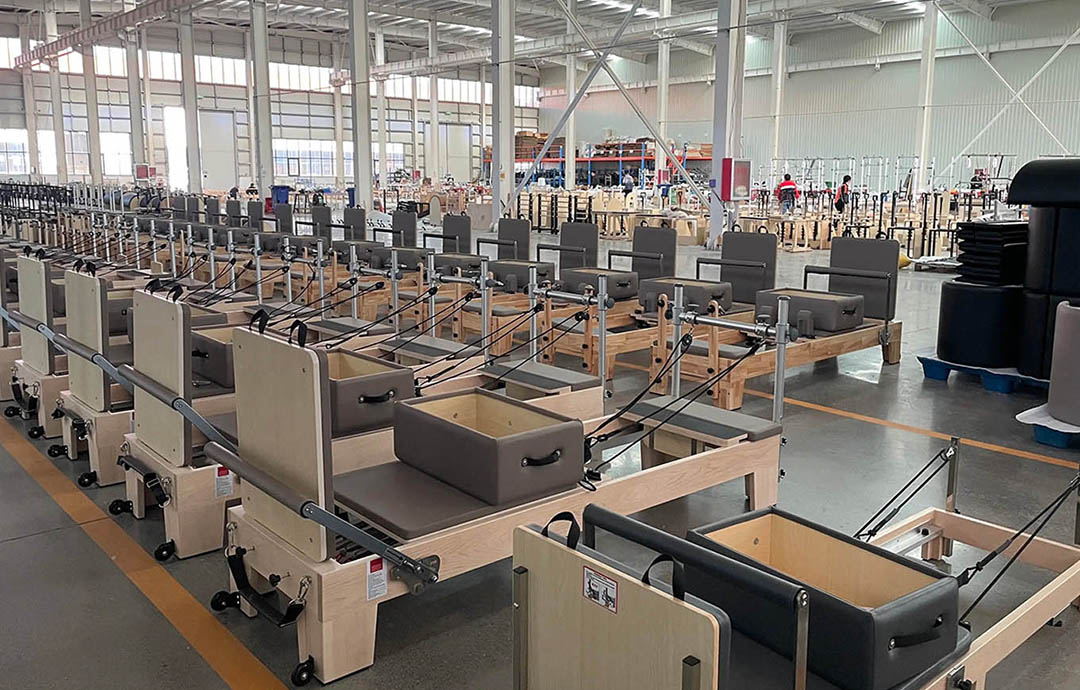
Working with a full-service Pilates equipment supplier can simplify the purchasing process. Instead of sourcing every machine separately, you can coordinate your equipment selection, product specifications, finishes, and delivery requirements through one supplier.
The quality of your equipment affects daily operations, client experience, and long-term maintenance costs. For studio owners, choosing a reliable Pilates equipment manufacturer is an important part of building a sustainable business.
Before placing an order, consider the following factors.
Product quality and durability: Check the frame construction, resistance system, upholstery, moving components, and expected maintenance requirements.
Equipment range: Look for a supplier that offers reformers, Cadillac machines, Pilates chairs, barrels, and accessories, allowing you to build a coordinated studio setup.
Customization options: Depending on the manufacturer, options may include frame finishes, upholstery colors, logos, and other product configurations.
Commercial suitability: Confirm that the equipment is designed for your intended training environment and expected usage frequency.
After-sales support: Ask about spare parts, maintenance instructions, warranty terms, and technical assistance.
Shipping and installation: For international orders or complete studio projects, confirm packaging, shipping arrangements, delivery schedules, and installation support.
A manufacturer that can supply a complete range of Commercial Pilates Equipment may help reduce the complexity of sourcing multiple product categories from different vendors.
Even the best equipment cannot replace professional instruction. Hire instructors with appropriate Pilates training and experience, and verify any qualifications required by your local regulations or insurance provider.
Develop a clear service menu based on your equipment and business model. Your offerings might include introductory Pilates sessions, private reformer training, small-group classes, and specialized programs for different fitness levels.
Before opening, establish equipment inspection routines, cleaning procedures, client screening practices, and safe operating guidelines. Proper staff training and equipment maintenance help support a consistent customer experience.
Once your studio is ready, build a marketing strategy that helps potential clients discover your services and understand what makes your business different.
Start with a professional website that includes your location, class offerings, instructor information, booking options, and contact details. Optimize your pages for relevant local search terms, such as Pilates studio near me, Pilates classes, and reformer Pilates classes.
You can also use social media to share studio tours, exercise demonstrations, instructor introductions, and client-approved testimonials. Introductory packages and referral programs may encourage new clients to try your services.
For equipment manufacturers and suppliers, this stage also highlights an opportunity to serve entrepreneurs who are planning their first studio. Providing equipment catalogs, layout suggestions, product specifications, and purchasing guidance can help potential studio owners make informed decisions.
The cost varies according to location, studio size, renovation requirements, equipment selection, staffing, and operating expenses. Prepare a detailed budget before committing to a lease or purchasing equipment, and maintain a reserve for unexpected costs.
Most studios begin with equipment suited to their primary services. Pilates reformers are common in reformer-focused studios, while Cadillac machines, Pilates chairs, barrels, mats, and accessories can expand training options. Your final equipment list should reflect your space, budget, and class format.
A private studio may operate with one to three reformers, while a boutique studio may require four to eight or more. The appropriate number depends on available space, class capacity, instructor coverage, and your business model.
Yes. Some Pilates equipment manufacturers and suppliers offer multiple machine types and accessories, making it possible to source a coordinated equipment package from one company. Confirm the available product range, customization options, delivery arrangements, and after-sales support before ordering.
Evaluate product quality, equipment variety, commercial suitability, customization capabilities, pricing, lead times, warranty coverage, and spare-part availability. For a complete studio project, clear communication and coordinated delivery are also important.
Depending on the manufacturer, customization may include upholstery colors, frame finishes, branding, and selected product configurations. Discuss your requirements early to confirm feasibility, production lead times, and any minimum order quantities.
Opening a Pilates studio involves careful planning, from choosing the right location and estimating startup costs to selecting machines and developing a customer acquisition strategy. The right equipment combination can help you create a functional training space that meets your clients' needs and supports future business growth.
As a Pilates equipment manufacturer and supplier, we provide equipment solutions for studio owners, fitness businesses, and commercial projects. From Pilates reformers and Cadillac machines to Pilates chairs, barrels, and accessories, we can help you select a coordinated range of equipment for your studio.
Whether you are opening a boutique Pilates studio or developing a larger commercial facility, contact us to discuss your floor space, target market, equipment requirements, and budget. We can help you plan a suitable Pilates studio equipment package for your project.






GUANGZHOU GANAS FITNESS EQUIPMENT CO.,LTD is one of the top ten brands of full-set commercial gym equipment in China. It provides and produces a full set of commercial gym equipment and has a complete production process and quality management system to ensure that each product meets the expectations and requirements of customers.
Copyright © 2026 Mango Sports Goods Co., Ltd All rights reserved.




 English