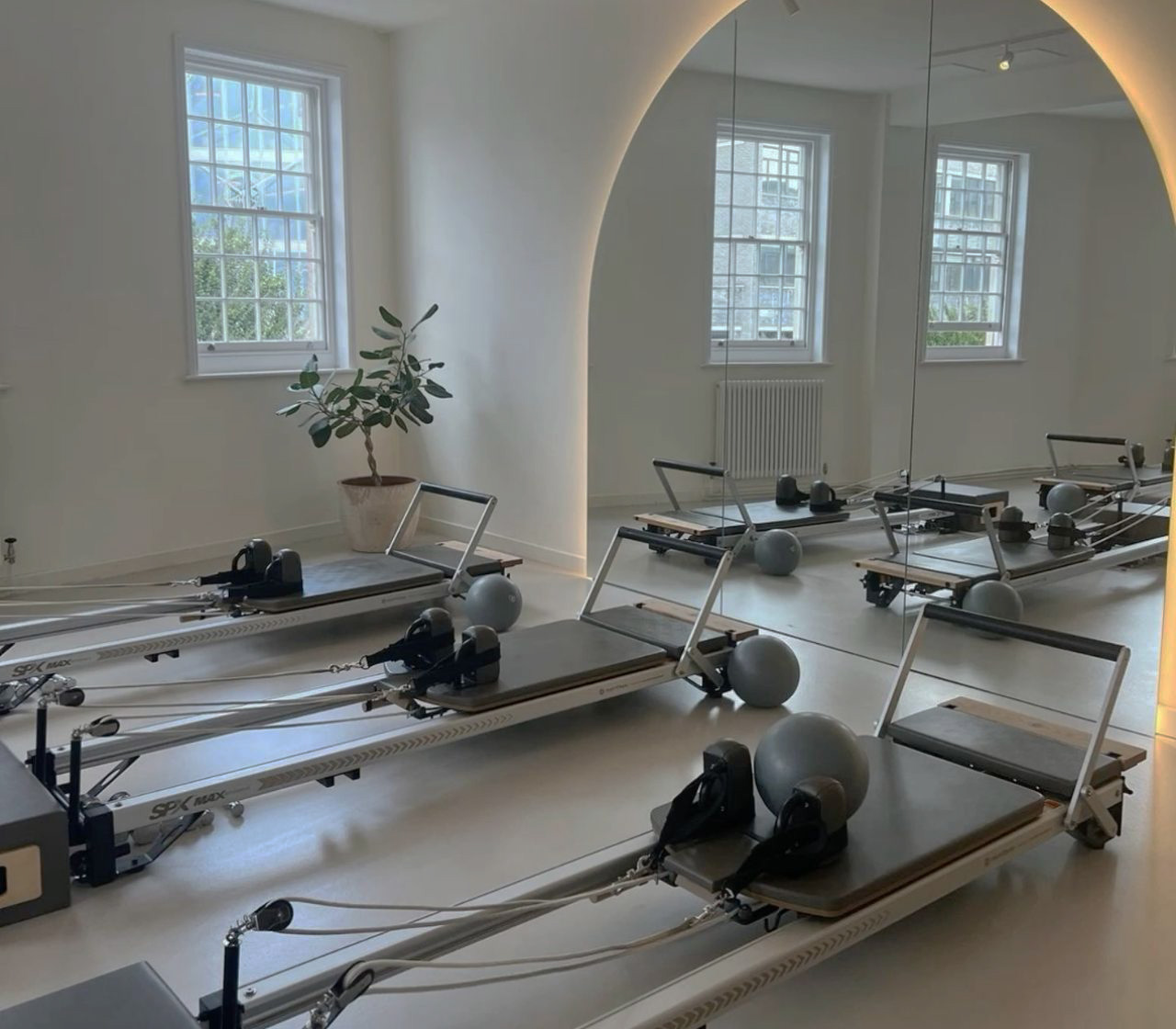
Learning how to use a Pilates machine can help beginners improve core strength, flexibility, balance, posture, and overall body control. Among different types of Pilates equipment, the pilates reformer is one of the most versatile machines because it uses springs, a moving carriage, straps, and a stable frame to support a wide range of exercises.
If you are new to Pilates, understanding the basic parts of a Pilates machine and learning how to use a Pilates reformer correctly can make your workouts safer and more effective. This guide explains how to use a Pilates machine, how to adjust the equipment, and which Pilates exercises are suitable for beginners.
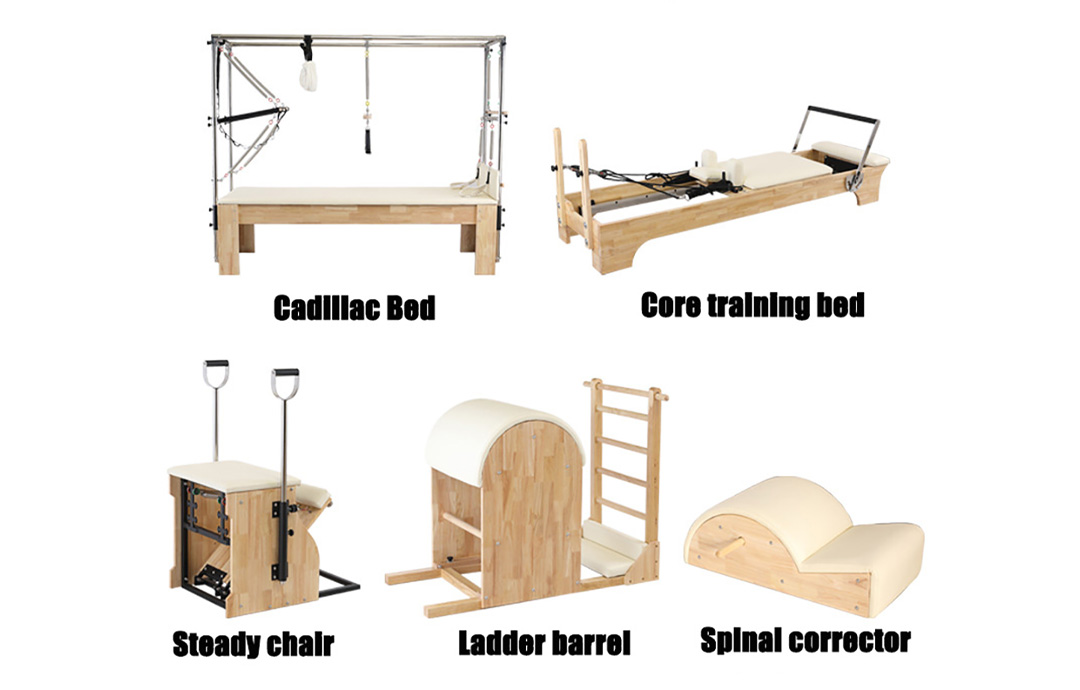
A Pilates machine is a piece of exercise equipment designed to support controlled movements and resistance-based Pilates exercises. The term can refer to several types of Pilates equipment, including the Pilates Reformer, Cadillac, Pilates Chair, and other specialized machines.
The Pilates Reformer is particularly popular in professional Pilates studios, fitness centers, rehabilitation facilities, and home gyms.
A Pilates Reformer typically consists of:
A stable frame
A moving carriage
Springs for resistance
Shoulder rests
A footbar
Straps or ropes
Handles
Adjustable supports
The combination of these components allows users to perform exercises while lying, sitting, kneeling, or standing on the machine.
A Pilates machine uses controlled resistance to make exercises more challenging while also providing support during movement.
For a Pilates Reformer, the springs create resistance as the carriage moves along the frame. By changing spring resistance, adjusting the footbar, and changing body position, users can modify the difficulty of an exercise.
If you are wondering how to use a Pilates machine, the basic process starts with adjusting the equipment to your body and exercise requirements.
Before starting your workout, inspect the Pilates machine to make sure the carriage, springs, straps, footbar, and other components are properly positioned.
A stable and correctly adjusted machine is important for safe Pilates training.
The footbar position should be adjusted according to the exercise and the user's body proportions.
Different Pilates exercises may require different footbar positions. Beginners should start with a comfortable position that allows them to maintain proper body alignment.
Pilates Reformers use springs to provide resistance.
The appropriate resistance depends on the exercise, fitness level, and training objective. Beginners should generally learn the movement with manageable resistance before progressing to more challenging settings.
Get onto the Pilates machine carefully and position your body according to the exercise instructions.
Maintain controlled movements and pay attention to your spine, shoulders, hips, knees, and feet.
Pilates focuses on controlled and precise movement rather than simply performing as many repetitions as possible.
Move the carriage smoothly and avoid using momentum to complete the exercise.
The return phase is also an important part of a Pilates exercise.
Instead of allowing the carriage to return quickly, control the movement against the spring resistance. This helps maintain tension and encourages better body control.
The Pilates Reformer for beginners should be used with simple exercises that allow users to become familiar with the machine.
Beginners should first learn how to adjust the equipment and understand how the carriage and springs work.
Footwork is one of the common introductory Pilates Reformer exercises.
The user lies on the carriage with their feet positioned on the footbar and pushes the carriage away while maintaining controlled movement.
This exercise can help beginners understand spring resistance and carriage movement.
The Reformer can be used for controlled leg pressing movements. Users push against the footbar while maintaining stable body alignment.
The movement should be performed smoothly rather than with sudden force.
A Pilates Reformer can also support bridging exercises.
The user lies on the carriage and lifts the hips while maintaining control through the core and lower body.
Using the straps or ropes, users can perform different arm movements while sitting or lying on the carriage.
These exercises can help train the upper body while requiring users to maintain core stability.
Using Pilates equipment can provide several benefits when exercises are performed correctly and consistently.
Many Pilates exercises require the user to maintain abdominal and trunk stability. Regular training can help develop better core control.
Controlled stretching and movement patterns can help improve flexibility and range of motion.
Pilates exercises require users to coordinate different parts of the body while maintaining controlled movement.
Pilates training emphasizes body alignment and core control, which may help users develop better posture and movement awareness.
One major advantage of a Pilates Reformer is its adjustable spring resistance. This makes the equipment suitable for different fitness levels and exercise progressions.
A Pilates machine can support a wide range of exercises.
Depending on the equipment and user's experience, common Pilates Reformer exercises include:
Footwork
Leg press movements
Bridging
Lunges
Long stretch
Short box exercises
Arm exercises
Leg strap exercises
Core exercises
Stretching movements
The exact exercises available depend on the Pilates machine configuration and accessories.
Proper adjustment is an important part of learning how to use a Pilates machine.
The footbar should provide a comfortable and stable position for the exercise being performed.
Choose spring resistance according to the exercise and your ability to maintain proper form.
Straps should be positioned so that users can perform the intended movement without excessive stretching or discomfort.
For exercises performed on the carriage, shoulder rests should be positioned correctly to provide appropriate support.
Understanding how to use a Pilates machine also means understanding basic safety practices.
Beginners should start with basic movements before attempting advanced Pilates Reformer exercises.
Keep your spine, shoulders, hips, knees, and feet properly aligned during exercise.
Pilates is based on controlled movement. Avoid using excessive momentum or suddenly releasing spring resistance.
More resistance does not always mean a better workout. Select a resistance level that allows you to maintain good form.
If you are completely new to Pilates, working with a qualified Pilates instructor can help you learn equipment adjustments, exercise techniques, and proper body positioning.
Traditional mat Pilates mainly uses body weight and sometimes small accessories such as resistance bands or Pilates rings.
A Pilates machine, especially a Reformer, introduces adjustable resistance and mechanical support.
| Feature | Mat Pilates | Pilates Machine |
|---|---|---|
| Main resistance | Body weight | Springs and body weight |
| Equipment | Minimal | Specialized equipment |
| Exercise variety | Moderate | Extensive |
| Resistance adjustment | Limited | Adjustable |
| Support | Floor-based | Machine-based |
| Suitable for | Home and studio | Studio, gym, and home use |
Both methods can be effective. The right option depends on the user's goals, experience, available space, and preferred training style.
The ideal Pilates training frequency depends on your fitness level and training goals.
Beginners can start with a few sessions per week and gradually increase training frequency as they become more familiar with the equipment and exercises.
Consistency is generally more important than performing very long or overly intense sessions.
If you are planning to purchase Pilates equipment, several factors should be considered.
A stable and durable frame is important for regular Pilates training.
Look for adjustable footbars, springs, straps, and other components that allow the machine to accommodate different users and exercises.
A versatile Pilates Reformer can support a wide range of movements, making it suitable for different training programs.
Consider the available room before purchasing a Pilates machine. Professional Pilates Reformers can require significant floor space.
Home users may prioritize compact design and ease of storage, while Pilates studios and fitness facilities may require commercial-grade equipment designed for frequent use.
For Pilates studios, fitness centers, hotels, rehabilitation facilities, and commercial gyms, professional Pilates machines can provide greater durability and versatility for regular training.
A well-designed Pilates Reformer should provide stable movement, adjustable resistance, comfortable user support, and convenient adjustment mechanisms.
For commercial applications, manufacturers can also provide different configurations and customization options according to the requirements of the facility.
To use a Pilates machine, first inspect and adjust the equipment, select appropriate spring resistance, position your body correctly, and perform exercises using slow and controlled movements. Beginners should start with simple exercises and learn proper technique before progressing.
Yes. A Pilates Reformer can be suitable for beginners because adjustable springs and machine components can provide both resistance and support. Beginners should start with basic exercises and appropriate resistance.
Footwork is commonly used as an introductory Reformer exercise because it allows beginners to become familiar with the carriage, footbar, and spring resistance.
Yes. A Pilates machine can be used at home if sufficient space is available and the equipment is installed and adjusted correctly.
Beginners can start with a few Pilates sessions per week and gradually adjust their training frequency based on their fitness level, goals, and recovery.
Pilates exercises use resistance and controlled movement, which can help strengthen and condition muscles. The training emphasis is generally on strength, stability, flexibility, and body control rather than maximal muscle size.
“Pilates machine” is a broad term that can describe different types of Pilates equipment. A Pilates Reformer is a specific type of Pilates machine that uses a moving carriage, springs, footbar, straps, and other components.
The difficulty depends on the exercise, resistance, and user's experience. A Pilates Reformer can be adjusted for different training levels, from beginner movements to more advanced exercises.
Learning how to use a Pilates machine starts with understanding the equipment, making the correct adjustments, choosing suitable resistance, and performing exercises with controlled movements. The Pilates Reformer is one of the most versatile types of Pilates equipment and can support exercises for the core, legs, arms, flexibility, balance, and overall body control.
For beginners, starting with basic Pilates exercises and learning proper technique is the best way to become familiar with the machine. For professional Pilates studios and fitness facilities, a durable and adjustable Pilates machine can provide a versatile solution for different users and training programs.





GUANGZHOU GANAS FITNESS EQUIPMENT CO.,LTD is one of the top ten brands of full-set commercial gym equipment in China. It provides and produces a full set of commercial gym equipment and has a complete production process and quality management system to ensure that each product meets the expectations and requirements of customers.
Copyright © 2026 Mango Sports Goods Co., Ltd All rights reserved.



 English